The Authentic Orthography
Πόντος Póntos
The Primordial Sea · Personification of the Ocean · Father of Sea-Creatures
The Authentic Orthography
The Primordial Sea · Personification of the Ocean · Father of Sea-Creatures
Why póntos.com is the correct form
Πόντος
The name in its original Greek form. The acute accent on the first omicron preserves the pitch stress of the ancient word — a feature entirely lost in the ASCII transliteration.
PONTOS
Stripped of its Greek identity, the name was reduced to six Latin letters. The stress mark was erased, the breathing lost, the word flattened into an undifferentiated string.
Póntos
The acute accent on the ó restores the stress placement of the original Greek. This is not decoration — it is philological accuracy. The domain encodes to Punycode, but the browser displays the truth.
póntos.com → xn--pntos-0ta.com
The non-ASCII character ó (U+00F3) is encoded while the ASCII remains visible. To the DNS, it is Punycode. To humanity, it is Póntos.
How the sea was truly spoken
Born before the gods, older than Olympus
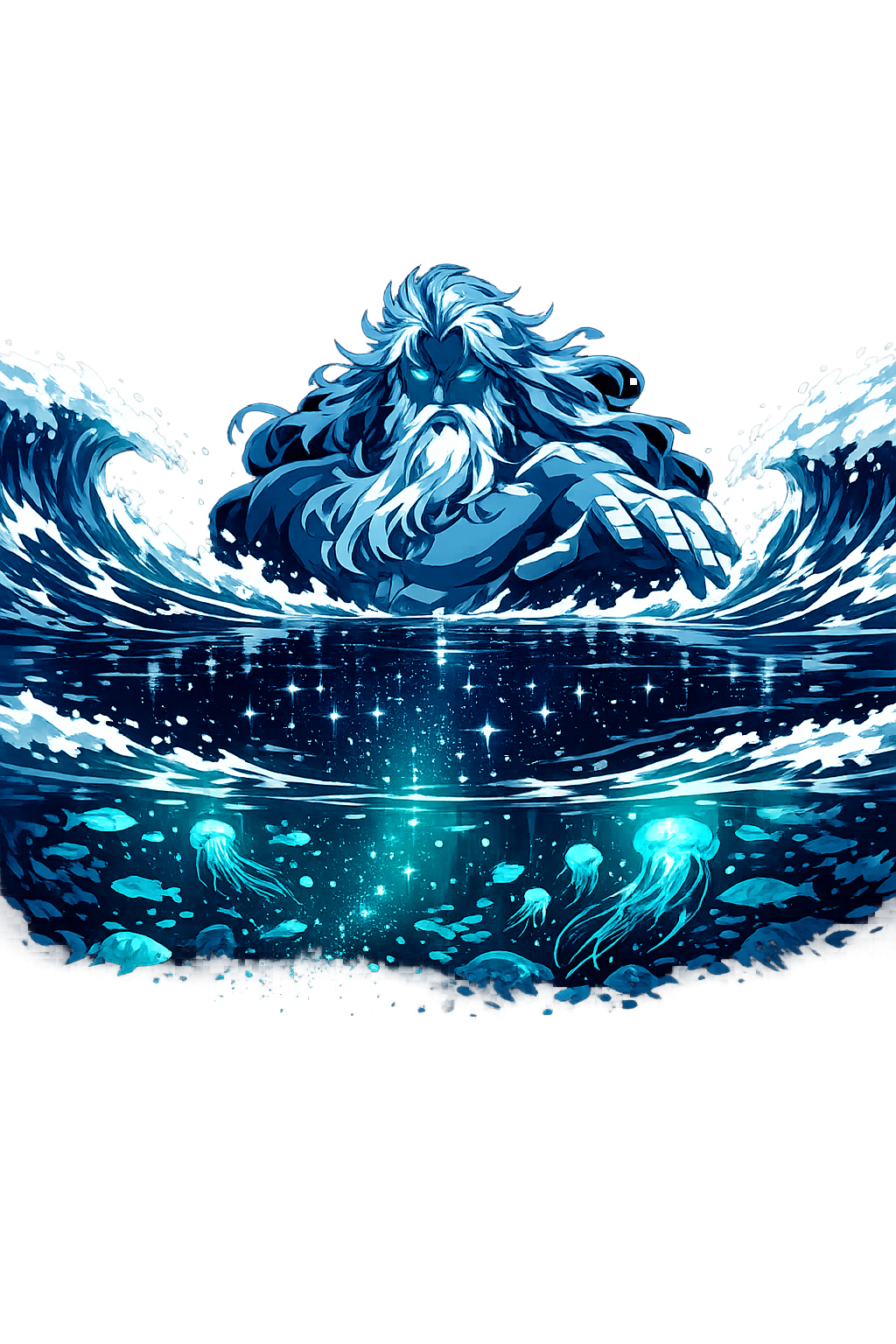
Póntos is not merely a sea. He is the primordial salt water itself — the vast, undifferentiated expanse from which all marine life and sea-divinity would later emerge. According to Hesiod's Theogony, he was born from Gaia alone, without a father — a spontaneous generation from the earth itself.
The Pontos was the Mediterranean and all salt water — the unfathomable deep that surrounded the known world and stretched into mystery.
By his union with Gaia, Pontos fathered Nereus, Thaumas, Phorcys, Ceto, and Eurybia — the founding divinities of all marine life.
Born directly from Gaia without a father. He represents the sea as an elemental force — pre-dating the Olympian order and the rule of Zeus.
Where light does not reach and pressure crushes stone. The Pontos contains depths unknown even to the gods — the original chaos beneath the waves.
Stories from the deep
By Gaia, Pontos produced five divine children who define the taxonomy of the Greek sea. Nereus, the Old Man of the Sea, was gentle and truthful; Thaumas personified the wonders of the deep; Phorcys and Ceto together produced a brood of monsters; and Eurybia commanded the winds and currents. Each child inherited a different aspect of their father's watery domain.
Thaumas — whose very name means "wonder" — married Electra, the Oceanid. Their union produced Iris, the messenger of the gods who travels on the rainbow, and the Harpies — the storm-winds that snatch souls and defile what is clean. From wonder came both beauty and terror, as the sea itself contains both.
The brother-sister pair Phorcys and Ceto produced the monstrous lineage that would challenge heroes: the Graeae, the Gorgons (including Medousa), the dragon Ladon, and perhaps even the sea-serpent that guards the straits. These are not aberrations but necessary expressions of the sea's danger — the same waters that give life can also devour.
In Hesiod, Pontos stands at a crucial branching point of divine genealogy. He is the bridge between the pure primordials (Chaos, Gaia, Ouranos) and the specialized marine divinities. Without Pontos, there is no Nereus, no Nereids, no sea-nymphs, no Proteus — the entire Greek conception of divine sea-life depends on this single primordial figure. He is the sea before it had a personality.
Kin across the waters
Póntos is the primordial deep — the sea before Poseidon claimed it, before the Nereids danced in its waves, before Odysseus wandered its surface. But he is not alone. Across the encoded web, the authentic names of the Greek pantheon have been restored — each with its own domain, its own lore, its own truth.
This is not a directory. This is a resurrection.
Enter the Codex
Attested forms across history
The Unicode restoration with acute accent on the first syllable, preserving the original Greek stress.
The stripped Latin form. All diacritics removed. The pronunciation is unrecoverable from this spelling alone.
See how Pontos behaves in the PUNYCODEX Type Tool — with predictive autocomplete, character-by-character breakdown, and scholarly constraint validation.
pontos
→
Póntos